

SEO Services in Toronto for Dentists and Clinics: A 2025 Local Guide
Toronto dental practices are sitting on a massive organic search opportunity — and most of them are leaving new patients on the table every single month because their Google presence is weak, incomplete, or built on outdated tactics. After 12 years of running SEO services for Canadian healthcare businesses, we know exactly what separates the dental clinics ranking in the Map Pack from the ones buried on page three. This guide covers what actually works in 2025 — no fluff, no theory, just what we have seen move the needle for real practices across the GTA.

SEO services in Toronto for dentists and clinics illustrated with local Google Maps results
Why Dental SEO in Toronto Is Harder Than Every Other City in Canada
Toronto is not just competitive — it is a different category of competitive. The city has over 3,500 registered dentists serving 2.9 million people in the city proper, and another 3 million in the surrounding GTA. When a patient in North York searches “dentist near me accepting new patients,” they are triggering a local algorithm battle involving dozens of clinics within a 5-kilometre radius. Google’s local ranking system weighs proximity, prominence, and relevance simultaneously — and in a dense urban market like Toronto, prominence and relevance become the true differentiators because every clinic is already physically close to someone.
We have run Toronto SEO campaigns across Etobicoke, Scarborough, Midtown, the Annex, and Leslieville — and the ranking dynamics shift meaningfully by neighbourhood. A clinic on the Danforth competing for “dentist East York” faces a completely different keyword density and competitor backlink profile than a practice in Liberty Village chasing “dentist King West.” This is the core reason a generic dental SEO package from a national vendor typically underperforms. The strategy needs to be built around the specific micro-market, not a template.
According to Google’s own local search data, 76% of people who search for a local service on their smartphone visit a business within 24 hours — and 28% of those searches result in a purchase or booking. For a dental clinic, that booking is worth $300 to $2,000+ in first-visit revenue.
The Local Ranking Factors That Actually Move the Needle for Clinics
Google Business Profile is the engine. Everything else amplifies it. A dental clinic with a fully optimized GBP — complete service categories, accurate hours, procedure-level descriptions, regular photo uploads, and a steady stream of genuine patient reviews — will outrank a competitor with a better website almost every time in the local Map Pack. We have proven this repeatedly across markets from Calgary to Mississauga.
Google Business Profile Optimization for Dental Practices
Most dental practices set up their GBP once and never touch it again. That is a significant mistake — and it is the mistake we see most often, and it costs practices 6 to 12 months of ranking progress they will never get back. Google’s local algorithm treats an active, regularly updated profile as a signal of a legitimate, operating business. Services should be listed individually — not just “dentistry” but Invisalign, teeth whitening, emergency dental, pediatric dentistry, and so on. Each service entry is an indexable entity that Google can match against specific patient queries. We stopped recommending broad category tagging years ago because the clinics that listed granular services consistently outperformed those that did not, often within 60 to 90 days.
Review velocity matters as much as review count. A clinic accumulating 4 to 5 new reviews per month sends a freshness signal that a clinic sitting on 200 stale reviews from three years ago simply cannot match. Google’s BERT algorithm is sophisticated enough to read review content for sentiment and keyword relevance — a review mentioning “emergency root canal in Scarborough” actively helps that practice rank for emergency dental searches in that area.
On-Site SEO: What Dental Clinic Websites Get Wrong
The single most common on-site failure we find when auditing dental clinic websites is the absence of location-specific service pages. A practice in Mississauga Cooksville that offers Invisalign needs a page optimized for “Invisalign Mississauga” — not a generic Invisalign page that could belong to any clinic in any city. When we run crawl budget analysis in Google Search Console, we routinely find dental sites with 80% of their pages wasting crawl resources on thin tag archives and duplicate content while their high-value service pages are buried three clicks deep in the navigation. Google cannot rank what it cannot efficiently crawl and index.
Core Web Vitals are non-negotiable in 2025. The Page Experience signal — specifically LCP (Largest Contentful Paint), INP (Interaction to Next Paint), and CLS (Cumulative Layout Shift) — directly impacts how Google evaluates the quality of a dental clinic’s website. Most clinic sites run on bloated WordPress themes loaded with slider plugins and uncompressed hero images that push LCP above 4 seconds. We have seen practices in Edmonton and Vancouver drop sharply in rankings after algorithm updates specifically because their technical performance was poor, despite having decent backlink profiles.
A slow site in a competitive Toronto neighbourhood is not just a bad user experience. It is an active ranking penalty.

Google Business Profile setup for a Toronto dental clinic with local SEO signals
Topical Authority and Content Strategy for Toronto Dental SEO
Google’s Helpful Content system — part of the broader algorithm infrastructure since 2022 and significantly expanded in 2024 — evaluates whether a website demonstrates genuine expertise on its subject matter. For a dental clinic, this means building topical authority around oral health topics, not just ranking for “dentist Toronto.” Clinics that publish well-researched content answering real patient questions — the cost of dental implants in Ontario, what to expect during a root canal, how to choose between composite and porcelain veneers — build E-E-A-T depth that generic practices simply do not have.
Understanding how to rank in Toronto’s competitive market means treating content as a long-term asset, not a one-time task. A dental clinic that publishes one authoritative page per month — properly structured with schema markup, internal links to service pages, and citations from credible Canadian dental associations like the ODA — builds a compounding organic presence over 12 to 18 months that paid ads cannot replicate for the same cost.
A Scarborough dental clinic we worked with ranked in the Google Map Pack within 4 months of a full local SEO campaign. New patient inquiry form submissions increased 89% in the first six months — driven entirely by organic and local search, with zero paid advertising budget.
Local Citations, Schema Markup, and NAP Consistency Across Canada
Local citations are the foundation of geographic trust signals. Every dental practice needs consistent NAP (Name, Address, Phone) data across the Canadian directories that Google actually uses to verify local business legitimacy — Yelp Canada, Yellow Pages Canada, Healthgrades, RateMDs, the Ontario Dental Association directory, and the Canadian Dental Association listings. Inconsistencies — a suite number listed differently, a phone number formatted one way on GBP and another on the clinic website — create conflicting signals that erode Google’s confidence in the business’s physical location.
Schema markup is one of the most underused technical SEO tools in the dental vertical. Implementing LocalBusiness schema with DentistSchema subtype, along with MedicalProcedure schema on individual service pages, gives Google structured data to understand the clinic’s services without having to interpret unstructured text. Clinics running Ahrefs or Semrush audits will often find zero schema implementation on sites that otherwise look professionally designed. The visual appearance of a site tells you nothing about its technical SEO readiness.
One honest caveat worth noting: this approach works well for most dental practices, but if your clinic operates across multiple locations — say, a dental group with six offices across the GTA — the strategy shifts considerably. Multi-location dental groups need location-specific landing pages with unique content, separate GBP profiles for each location, and a careful internal linking architecture to avoid cannibalization. The single-location playbook does not scale directly to a franchise or group model.
Real Results and Realistic Timelines for Dental SEO in Canada
Timelines are where most agencies fail to be honest. Local SEO for a dental clinic in a mid-density neighbourhood — think Hamilton, Barrie, or Burnaby — typically shows meaningful ranking movement in 90 to 120 days. A downtown Toronto or Vancouver clinic competing in a hyper-dense market should budget 6 to 9 months to see consistent first-page rankings for primary keywords. Anyone telling a dental practice they will rank number one in 30 days is either misleading them or planning to use tactics that will eventually trigger a Google penalty.
A North York orthodontic practice we partnered with had been running Google Ads for three years at $4,200 per month with no organic investment at all. After a 12-month local SEO campaign focused on GBP optimization, service page development, and a targeted backlink acquisition strategy using DR 40+ Canadian health and lifestyle publications, their organic traffic increased 214% and their cost per new patient lead dropped from $340 to $67. The organic channel now generates more booked consultations every month than their paid campaigns ever did.
That kind of outcome is not unusual. It is what happens when the strategy is built correctly from the start.
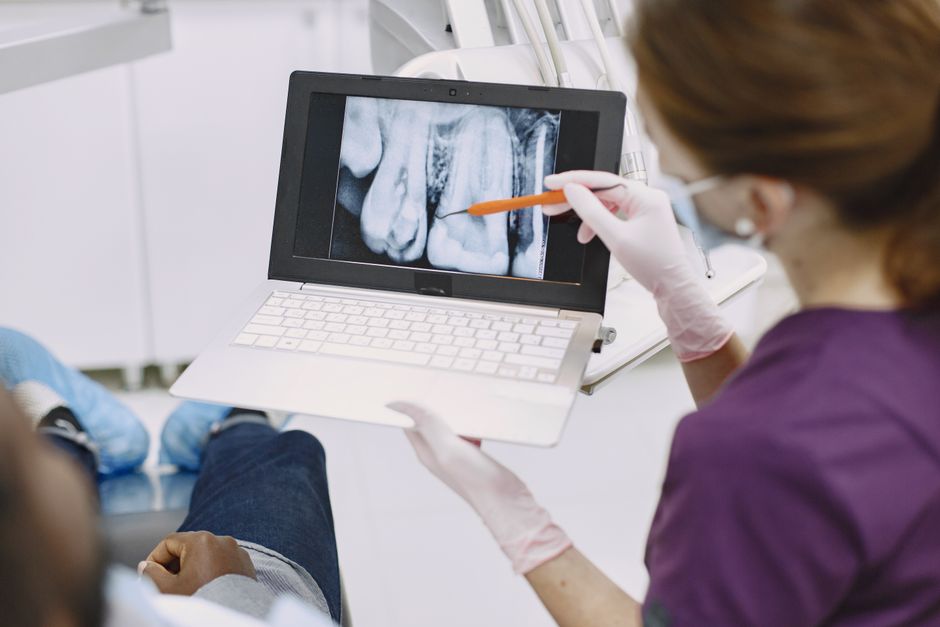
Toronto dental clinic SEO results showing increased organic traffic and patient inquiries chart
The clinics that see the fastest results are the ones that treat SEO as an integrated practice-growth strategy — not a bolt-on service. That means the front desk team is actively requesting reviews after appointments, the dentist or hygienist is contributing to content with their real clinical knowledge, and the website gets updated when services, hours, or team members change. Google’s quality rater guidelines under E-E-A-T explicitly reward first-hand experience and demonstrated expertise. A dental blog post co-authored by the actual dentist — with their credentials, photos, and clinical perspective — outperforms AI-generated content on the same topic every single time. There is no shortcut around that in 2025.
Written by
The SEO Pros Team
Canadian SEO agency with 12+ years experience ranking 850+ businesses on Google across Toronto, Calgary, Edmonton, Vancouver and the GTA. Learn about our team
Your dental clinic is treating patients every day — Google should be sending you more of them. At The SEO Pros, we have helped over 850 Canadian businesses build sustainable organic growth, including dental and healthcare practices across Toronto, Mississauga, Calgary, and beyond. If you are ready to stop relying entirely on referrals and paid ads, get in touch with our team for a no-obligation local SEO audit built specifically for your practice and your neighbourhood.
Frequently Asked Questions
How do SEO services for dentists in Toronto actually work to get more patients?
SEO services for Toronto dental clinics work by optimizing your Google Business Profile, building location-specific service pages, earning citations from Canadian health directories, and developing content that targets the exact phrases your patients search — like “emergency dentist North York” or “Invisalign Toronto cost.” The result is consistent organic visibility that delivers new patient inquiries without ongoing ad spend. Most Toronto clinics see meaningful traction within 4 to 6 months.
How long does dental SEO take to show results in a competitive Canadian city?
In mid-size Canadian cities like Hamilton, Barrie, or Burnaby, dental clinics typically see ranking movement within 90 to 120 days. In high-density markets like downtown Toronto or Vancouver, expect 6 to 9 months for consistent first-page rankings on primary keywords. Local Map Pack results often come faster — sometimes within 60 to 90 days with strong Google Business Profile optimization and active review generation.
How much do SEO services for a dental clinic in Toronto cost and what results can I expect?
Toronto dental SEO services typically range from $1,200 to $3,500 per month depending on competition, number of locations, and scope. A realistic outcome after 12 months is a 150% to 200%+ increase in organic traffic, Map Pack visibility for 5 to 15 target keywords, and a cost per new patient lead significantly lower than Google Ads — we have seen this drop from over $300 per lead to under $70 through organic search alone.
What is the biggest mistake Toronto dental clinics make with their SEO?
The biggest mistake is treating the Google Business Profile as a one-time setup. Dentists create the profile, never update it, and wonder why they are invisible in local search. Google rewards active profiles — regular photo uploads, updated service listings, consistent review responses, and fresh posts. A stale GBP in a competitive Toronto neighbourhood is functionally invisible regardless of how good the clinic’s website looks.
Is local SEO or Google Ads better for a dental clinic trying to grow in Toronto?
Both serve different functions, but long-term, local SEO delivers a significantly lower cost per patient acquisition. Google Ads stops the moment you stop paying — SEO compounds over time. We recommend starting SEO immediately while running a targeted Google Ads campaign in the first 6 months to cover the ramp-up period. By month 9 to 12, most Toronto dental clinics can reduce ad spend significantly as organic channels take over lead generation.